

STICKER CLICK TRICK:HOW A ROUTINE SEARCH GONE WRONG HIGHLIGHTS NEED FOR TIGHTER CONTROLS
Executive Summary
A NetCyberOps client recently had a user perform a simple Google search for supplies and unknowingly click on a compromised website, triggering a fraudulent security prompt designed to subtly trick the user into executing malicious code on their own system.
This specific type of attack is known as ClickFix—a social engineering technique in which a malicious website presents a fake verification prompt, leading the user to actually compromise their own security. In this case, the user followed the instructions and triggered an attempted execution of malicious code on the endpoint.
Fortunately, the Endpoint Detection and Response (EDR) platform installed by NCO immediately identified and blocked the suspicious activity before any payload execution, persistence, or system modification could occur. No malware was installed, no credentials were compromised, and no lateral movement or data exposure was observed—but it easily could have spiraled if protective measures weren’t already in place.
Incident Timeline

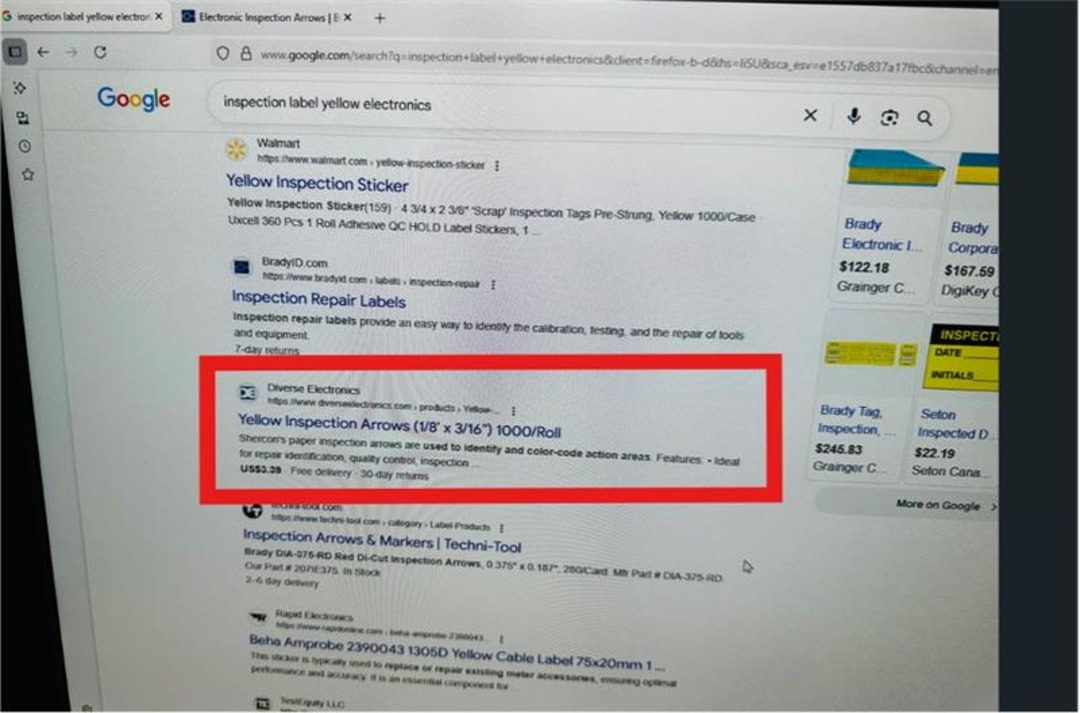
An NCO client’s user performed a Google search for “inspection label yellow electronics” and clicked on one of the top search results for a roll of stickers, just below highly respected brands like Walmart. The result showed no evidence of compromise, displaying a low price, free delivery and 30-day returns.
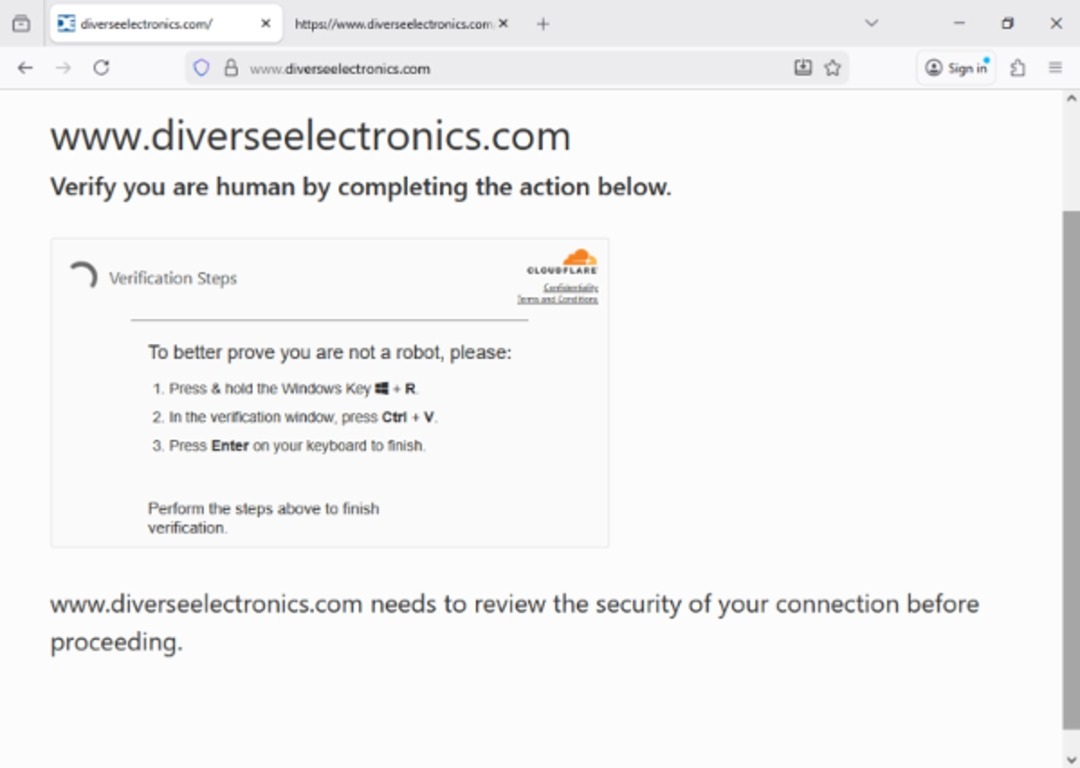
After clicking, the user was presented with a seemingly legitimate security challenge, displaying a familiar-looking screen and Cloudflare logo, but with unusual instructions to open the Windows Run dialog and paste a command to complete human verification.
The user followed the instructions and attempted to execute the pasted PowerShell command via the Run dialog.

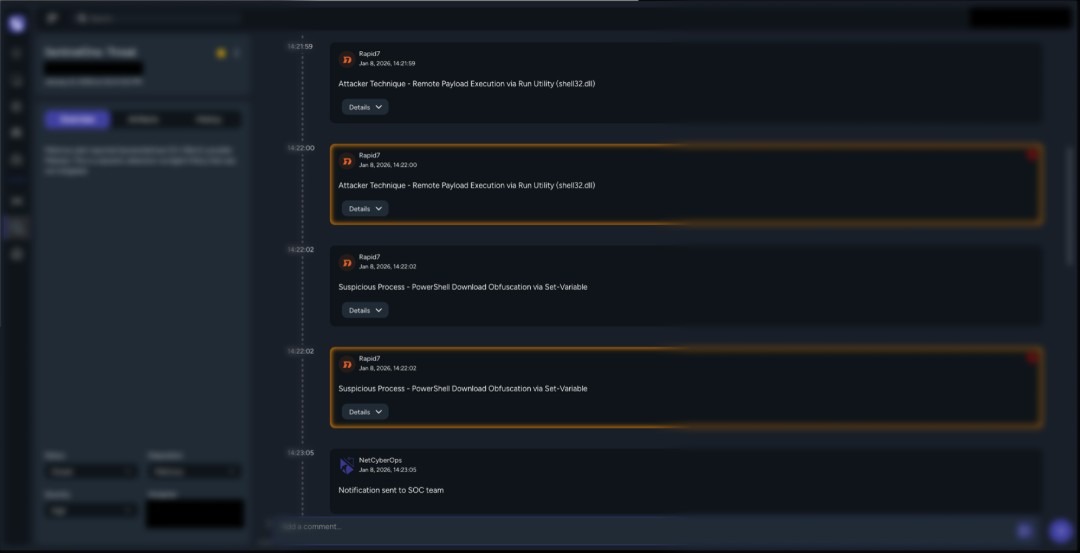
As soon as the PowerShell command was run, EDR software immediately killed and quarantined it.
Both the EDR and the SIEM alerted the NetCyberOps Security Operations Center (SOC) of the malicious activity.
No payload was downloaded or launched.

NCO SOC analysts reviewed the alert telemetry, validated the block action, and confirmed no secondary execution occurred.
Follow Up
ClickFix is a social engineering attack technique in which a malicious website presents a fake verification prompt—commonly disguised as a CAPTCHA, security check, or system error—and instructs the user to manually execute commands on their own device. Rather than exploiting a software vulnerability, ClickFix relies on manipulating user behavior to bypass technical security controls, making endpoint behavioral protection and user awareness critical defensive controls.
During our follow up with the customer, the user reported that they believed the prompt was a legitimate Google CAPTCHA verification and were unaware they had executed a PowerShell command on their device. The user indicated the instructions appeared consistent with normal web verification behavior and did not recognize the activity as malicious.
Users should be trained to recognize that legitimate websites and service providers will never require them to open system dialogs, paste commands, or run scripts as part of a verification or authentication process.
Organizations should provide targeted security awareness training addressing modern social engineering techniques, restrict non-administrative users from executing PowerShell where possible, and implement application control policies such as Windows Defender Application Control (WDAC) or AppLocker to prevent unauthorized script execution.
Periodic phishing and social engineering simulations can further reinforce safe decision-making. Clear reporting channels and positive reinforcement for early reporting should be emphasized to encourage user engagement.
Action Items
By combining targeted user training with technical restrictions on script execution, organizations create a layered defense that addresses both human behavior and technical abuse paths. This approach reduces the likelihood of successful execution attacks, limits the potential impact of compromised websites and social engineering campaigns, and improves overall resilience against emerging threat techniques.